The information on this website is general in nature and does not take into account your objectives, financial situation, or needs. Consider seeking personal advice from a licensed adviser before acting on any information.
Commercial truck operators in Australia need to understand the difference between compulsory CTP insurance, optional commercial cover and insurance that may be required by customers, contracts, finance providers or risk management obligations.
Truck insurance requirements in Australia can be confusing because not every important insurance policy is legally compulsory. Some cover is tied to vehicle registration, some is optional but commercially sensible, and some may be required by freight contracts, customers, finance providers or industry accreditation arrangements.
This guide explains the main categories of commercial truck insurance requirements for Australian operators, including owner-drivers, small transport businesses, heavy vehicle operators and fleets. It is general information only and does not replace legal, financial or insurance advice for your specific business.
What truck insurance is compulsory in Australia?
The main compulsory vehicle-related insurance for trucks in Australia is compulsory third party insurance, commonly called CTP insurance. CTP is linked to vehicle registration and is required before a truck can be legally registered for use on public roads.
CTP generally covers liability for injury or death caused to other people in a motor accident. The exact scheme, terminology and process vary by state or territory. For example, some jurisdictions include CTP as part of registration, while others require a separate CTP or green slip arrangement.
CTP is important, but it is limited. It generally does not cover:
- damage to your truck;
- damage to another person's vehicle or property;
- loss or damage to freight or cargo;
- business interruption or downtime;
- theft, fire, storm, rollover or collision damage to your own vehicle;
- contractual liabilities you agree to with customers or principal contractors.
Because of these limits, many commercial truck operators need additional insurance beyond compulsory CTP, even where the law does not make every policy mandatory.
Compulsory, optional and contract-required cover: the key difference
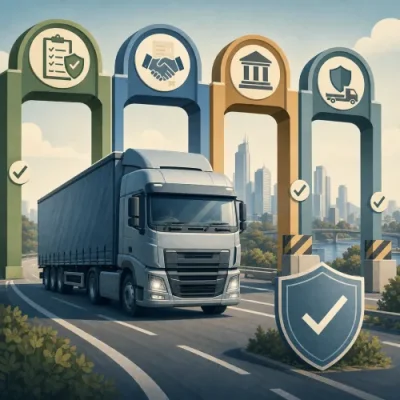
A practical way to understand commercial truck insurance requirements is to separate them into three categories.
| Category | What it means | Common examples |
|---|
| Compulsory by law or registration | Cover required to register or operate a vehicle legally, or to meet employment or business obligations. | CTP insurance, workers compensation where required for employees, state or territory registration requirements. |
| Optional but commercially important | Cover that may not be legally compulsory but can protect the truck, business income, cargo exposure or third-party property risk. | Comprehensive truck insurance, third party property damage, fire and theft, goods in transit, downtime cover, public liability. |
| Required by contract, customer or finance provider | Cover that another party requires before you can perform work, access a site, carry freight or finance the vehicle. | Minimum public liability limits, cargo insurance, comprehensive insurance noted to a financier, subcontractor insurance conditions. |
Confusing these categories can create gaps. A truck may be legally registered with CTP, but still fail to meet a customer's transport contract or expose the operator to uninsured property or cargo claims.
Common commercial truck insurance requirements
CTP and truck insurance
CTP is the starting point for road use, but it should not be treated as a complete commercial truck insurance solution. If your truck damages another vehicle, loading dock, fence, building, trailer or other property, CTP generally will not respond because it is focused on personal injury liability.
Operators should check the CTP and registration rules in the state or territory where the truck is registered, particularly if the business operates across borders or has vehicles registered in different jurisdictions.
Third party property damage insurance
Third party property damage insurance is not the same as CTP. It is designed to respond to claims for damage your truck causes to another person's property, subject to the policy terms, limits and exclusions.
This cover may be important for commercial operators because truck accidents can involve high-value vehicles, infrastructure, freight equipment or commercial premises. Some contracts may require evidence of third party property damage cover, although requirements vary.
Comprehensive truck insurance
Comprehensive truck insurance usually combines protection for your own vehicle with cover for damage caused to third-party property, subject to policy conditions. It may cover events such as collision, theft, fire, storm, malicious damage or rollover, depending on the policy.
Comprehensive cover is often required by finance or lease providers because the truck is a secured asset. A financier may require the operator to maintain comprehensive insurance, list the financier as an interested party and notify them if the policy is cancelled or materially changed.
If you are comparing levels of vehicle cover, our guide to comprehensive and third party truck insurance explains the practical differences in more detail.
Goods in transit or cargo insurance
Goods in transit, cargo or carrier's liability cover may be required when you carry freight for customers. Whether you need this cover can depend on what you transport, your contractual liability, the terms on your consignment notes and whether you operate as a carrier, subcontractor or freight forwarder.
Some customers may expect the carrier to hold insurance for loss or damage to goods, while others may have their own cargo arrangements and still require evidence of your liability cover. Do not assume that a comprehensive truck policy automatically covers freight. Cargo and vehicle damage are usually treated as separate risks.
Public liability insurance
Public liability insurance may cover certain claims involving injury or property damage connected with your business activities, subject to the policy wording. For truck operators, this can be relevant during loading, unloading, depot visits, site access and interactions with customers' premises.
Public liability is commonly required in transport contracts, construction site access agreements, warehouse arrangements and subcontractor onboarding documents. The required limit can vary significantly, so operators should check the contract rather than relying on assumptions.
Workers compensation and employment-related insurance
If your transport business employs workers, workers compensation obligations may apply. These requirements are state and territory based and are separate from truck insurance. Sole traders, company directors, subcontractors and labour hire arrangements can be treated differently depending on the jurisdiction and business structure.
Because the rules can be specific, operators should check the relevant state or territory workers compensation authority or obtain professional advice. Do not assume that motor insurance, public liability or personal accident cover replaces statutory workers compensation obligations.
Personal accident, sickness and downtime cover
Owner-operators often consider personal accident, sickness and downtime cover because the business may rely heavily on one driver and one vehicle. These covers are generally optional, but they may help manage cash flow if the driver cannot work or the truck is off the road after an insured event.
The details matter. Waiting periods, benefit limits, definitions of disablement, repair delay conditions and exclusions can affect whether a claim is accepted and how much is paid.
Insurance requirements for interstate truck operators
Interstate truck insurance requirements involve more than simply buying a policy that mentions Australia-wide use. Operators should consider registration, CTP arrangements, vehicle configuration, garaging location, routes, freight type and whether the policy covers the regions where the truck actually operates.
For heavy vehicles, safety and compliance obligations may also interact with insurance risk. Many parts of Australia operate under the National Heavy Vehicle Law framework administered by the National Heavy Vehicle Regulator, while Western Australia and the Northern Territory have separate arrangements. Chain of responsibility, fatigue management, mass and dimension compliance, maintenance records and driver fitness may all be relevant to operational risk.
Insurance policies do not usually replace regulatory compliance obligations. If a claim involves an unroadworthy vehicle, overloaded combination, unauthorised driver, fatigue breach or illegal use, the insurer may review the policy wording and claim circumstances carefully. The outcome will depend on the facts and the policy terms.
Contractual insurance requirements in transport and logistics
Many commercial truck operators first encounter detailed insurance requirements when signing a freight contract, subcontractor agreement or customer service agreement. These requirements are not necessarily imposed by legislation, but they can still be binding if you accept the contract.
Common contract insurance clauses may require:
- a minimum level of public liability insurance;
- motor vehicle or comprehensive truck insurance for specified vehicles;
- goods in transit, cargo or carrier's liability cover;
- workers compensation insurance where employees are involved;
- evidence of insurance, such as certificates of currency;
- notification if cover is cancelled, reduced or not renewed;
- the customer, principal contractor or financier to be noted as an interested party where appropriate.
Before signing, check whether the insurance wording matches the work you actually perform. A contract may require cover for refrigerated goods, dangerous goods, livestock, containers, oversized loads or high-value freight. These risks may need specific underwriting and may not be covered under a standard policy.
If you are unsure how a contract requirement fits your current cover, it may be useful to discuss the wording with a broker who understands transport insurance before starting the work.
Finance and lease requirements for trucks
If your truck is financed or leased, the finance provider may impose insurance conditions. These are separate from registration and road law requirements. The lender or lessor may require comprehensive cover to remain in place for the loan or lease term because the vehicle secures the finance.
Common finance-related requirements may include:
- comprehensive insurance for the full term of the loan or lease;
- the financier being listed as an interested party;
- limits or conditions around who may drive the vehicle;
- restrictions on vehicle use, modifications or operating locations;
- prompt notification of claims, cancellations or major changes.
Failing to maintain required insurance can create problems under the finance agreement, even if the truck remains registered. Operators should read both the insurance policy and the finance contract carefully.
Evidence of insurance: what customers may ask for
Commercial customers, freight platforms, depots and principal contractors may ask for evidence that your business holds insurance. This is often provided through a certificate of currency, which summarises key policy details at a point in time.
A certificate of currency may show the insured entity, policy type, period of insurance, vehicle details, limits and any noted interested parties. It is not the full policy wording, so it should not be treated as proof that every possible activity is covered.
Check that the insured business name matches the entity performing the work. This can be important where a sole trader, company, trust or partnership structure is involved.
How to review your truck insurance requirements
Because truck insurance needs vary, a simple checklist can help operators identify where requirements may come from.
- Confirm registration and CTP requirements. Check the state or territory rules for each registered truck and trailer combination.
- List your actual operations. Include vehicle type, routes, freight, depots, subcontracting, site access and interstate work.
- Review customer and subcontractor contracts. Identify required policy types, minimum limits and certificate wording.
- Check finance or lease documents. Confirm whether comprehensive cover, interested party notation or other conditions apply.
- Compare policy wording against the work. Look for exclusions involving freight type, radius, drivers, dangerous goods, loading, unattended vehicles or unlisted trailers.
- Keep records current. Maintain certificates of currency, vehicle schedules, driver lists, maintenance records and claims history.
- Review cover when the business changes. New routes, new contracts, additional trucks, different freight or depot changes can affect insurance needs.
For operators seeking help with suitable cover options, Insurance For Trucks provides a starting point for truck insurance enquiries. Any policy availability, pricing and terms will depend on your circumstances, insurer criteria and underwriting assessment.
Common misunderstandings about heavy vehicle insurance requirements
"CTP means my truck is insured." CTP is compulsory, but it does not usually insure your truck, cargo or damage to other property.
"If it is not legally compulsory, I do not need it." Some cover is not required by law but may still be required by customers, finance providers or your own risk management needs.
"My customer has cargo insurance, so I have no exposure." Customer cargo arrangements do not automatically protect you from contractual liability or recovery action. Check the contract and your policy.
"A certificate of currency tells me everything." A certificate is useful evidence, but the full policy wording, schedule, endorsements and exclusions determine how cover operates.
"Interstate work is automatically covered." Some policies may have conditions about operating radius, garaging, routes, vehicle use, drivers or compliance. Check before taking on different work.
Key takeaways for commercial truck operators
In Australia, CTP is the core compulsory insurance connected to truck registration, but it is only one part of the risk picture. Commercial truck operators may also need vehicle damage cover, third party property damage, cargo insurance, public liability, workers compensation, personal accident or downtime cover depending on their business.
The most important step is to identify where each requirement comes from: law, registration, contract, finance agreement or business risk. Once you know that, you can compare policy wording, certificates and exclusions more effectively and reduce the chance of discovering a gap only after an incident.
Published: Monday, 17th Aug 2026
Author: Paige Estritori




No comments yet. Be the first to share your thoughts.